
Insurance, Translated: A Plain-Language Guide for Nonprofits and Houses of Worship
Here’s a book for those who'd rather change the world than read an insurance policy.
Is insurance a foreign language to you?
If so, that’s understandable. Most leaders of houses of worship and nonprofit organizations are driven by causes and ideals. They’re difference makers. As a result, understanding the finer points of insurance can seem like a distraction. Yet remaining uninformed has a price. An under-insured church, private school or food bank could be bankrupted by a lawsuit, fire or natural disaster.
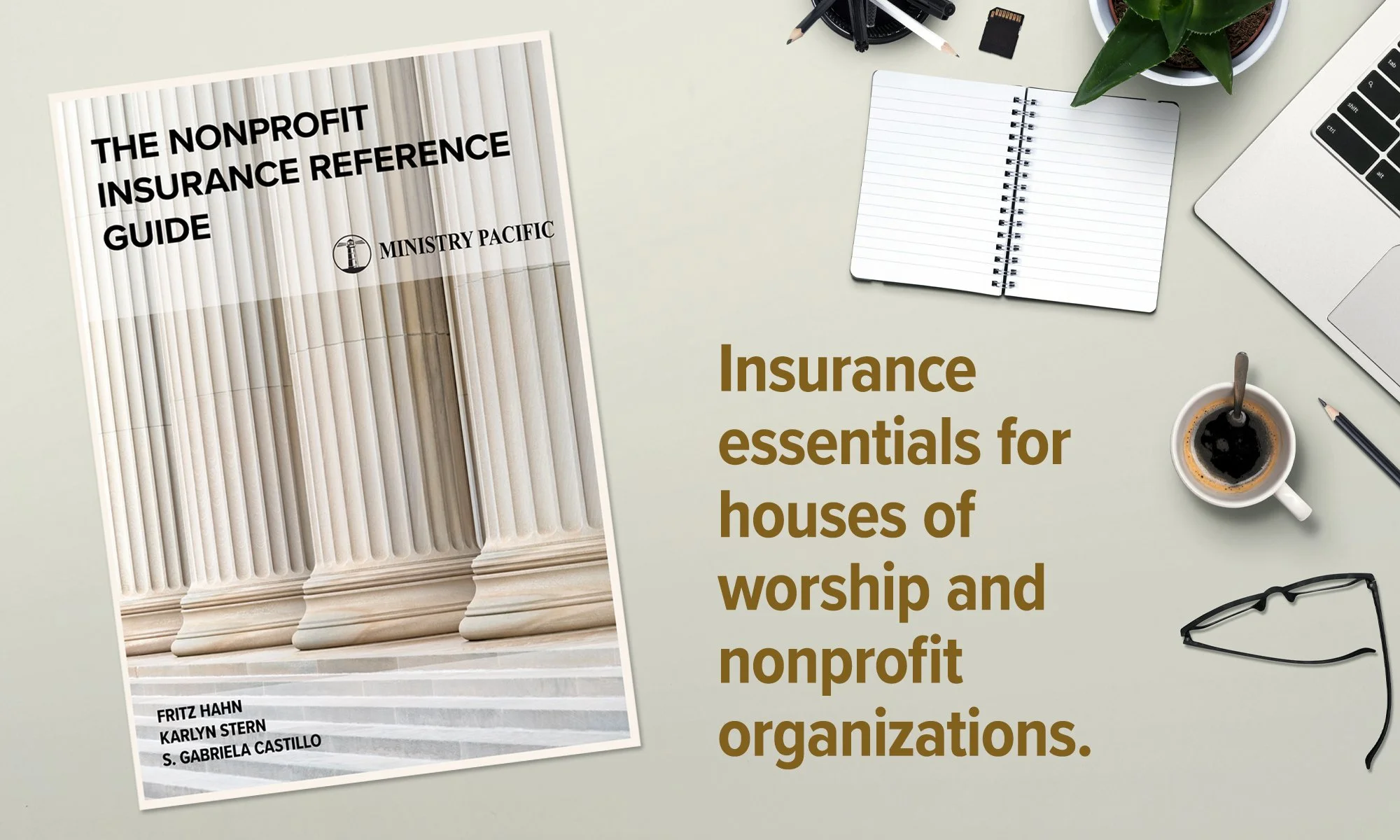
But there’s good news for those who view insurance as alien: A lay-friendly, yet comprehensive book is now available. The Nonprofit Insurance Reference Guide, published by Ministry Pacific Insurance Services, can be purchased at Amazon.com. All proceeds from the sale of the book are donated to nonprofit organizations.
Who is the book for?
This guide was created for busy, mission-oriented people with little or no formal training in risk management. It helps leaders understand how insurance can support their organizations and advance their ministry or cause.
But newcomers to insurance are not the only audience who will benefit. Those who have some familiarity with insurance, disaster recovery and risk management will not be disappointed. The book’s comprehensive nature means all readers will learn something new.
This guidebook for insurance consumers is not intended to be read cover to cover. Best used as a reference, it employees non-technical language to unpack and explain different types of insurance, why they matter and benefits and limitations. It’s written specifically for houses of worship and nonprofit organizations, covering relevant topics including:
Protection of children and youth
Camps and carnivals
Freedom of religious expression
Property insurance, including unique assets such as pipe organs, stained glass and historic items
Insurance for mission trips and international travel
Beyond these popular concepts, The Nonprofit Insurance Reference Guide details the A to Z of insurance coverage options. Automobile, active shooter, cyber crime, embezzlement, slip-and-fall, sexual misconduct, property and umbrella policies (and many more) are all covered.
How to compare insurers
Uniquely, the book details objective criteria that can be used to evaluate one insurance proposal over another. Consumer insurance is marketed as a commodity and resorts to big-budget gimmicks to get buyers’ attention. These over-the-top sales tactics could lead even an educated consumer to think all insurance is the same – it’s just the mascots that differ! If this is the case, then price is the only differentiator and cheaper is better. This idea, however, is dangerous for any organization that’s serious about risk management and disaster recovery.
An objective criteria for comparison can be found in the insurer’s AM Best rating – information publicly available to all. This independent, third-party determination assesses a carrier’s financial strength and ability to pay claims. Is there anything more important?
In addition, brokers and sales reps are not all cut of the same cloth. How can a lay person know if their agent is a wolf in sheep’s clothing? One way is to insist on a building valuation. This means, before a contract is signed, the agent makes sure all facility assets are included in the contract. This is more than a perfunctory checklist. Descriptions of property must be up to date and accurate. Why? Claims will only be paid based on the data the client submits to the insurer. If the data about a facility is incomplete, a settlement may not be adequate to cover the loss. If an insurance representative glosses over or ignores this step (especially if they “cut and paste” the existing insurance policy), the buyer should beware. This is often an indication the sales rep is taking a shortcut to secure a commission at the customer’s expense.
Insurance translated
Admittedly, insurance can be intimidating when it’s not translated into plain language. Consider The Nonprofit Insurance Reference Guide your translation. Don’t let insurance remain a mystery. Invest time in understanding how your property and liability coverage can be a key part of your organization’s financial and disaster recovery strategies. This book is a thorough, yet understandable tool for pastors, nonprofit directors and even financially savvy board members.
“If you don’t invest in risk management, it doesn’t matter what business you’re in, it’s a risky business.”
About the authors
Fritz Hahn is the founder and managing member of Ministry Pacific Insurance Services.
Karlyn Stern is CEO and Operations Manager. S. Gabriela Castillo is Hispanic Ministry Manager.
Ministry Pacific is an insurance broker exclusively devoted to serving houses of worship and 501c3 nonprofit organizations.