
When faith meets employment law: What your ministry needs to know
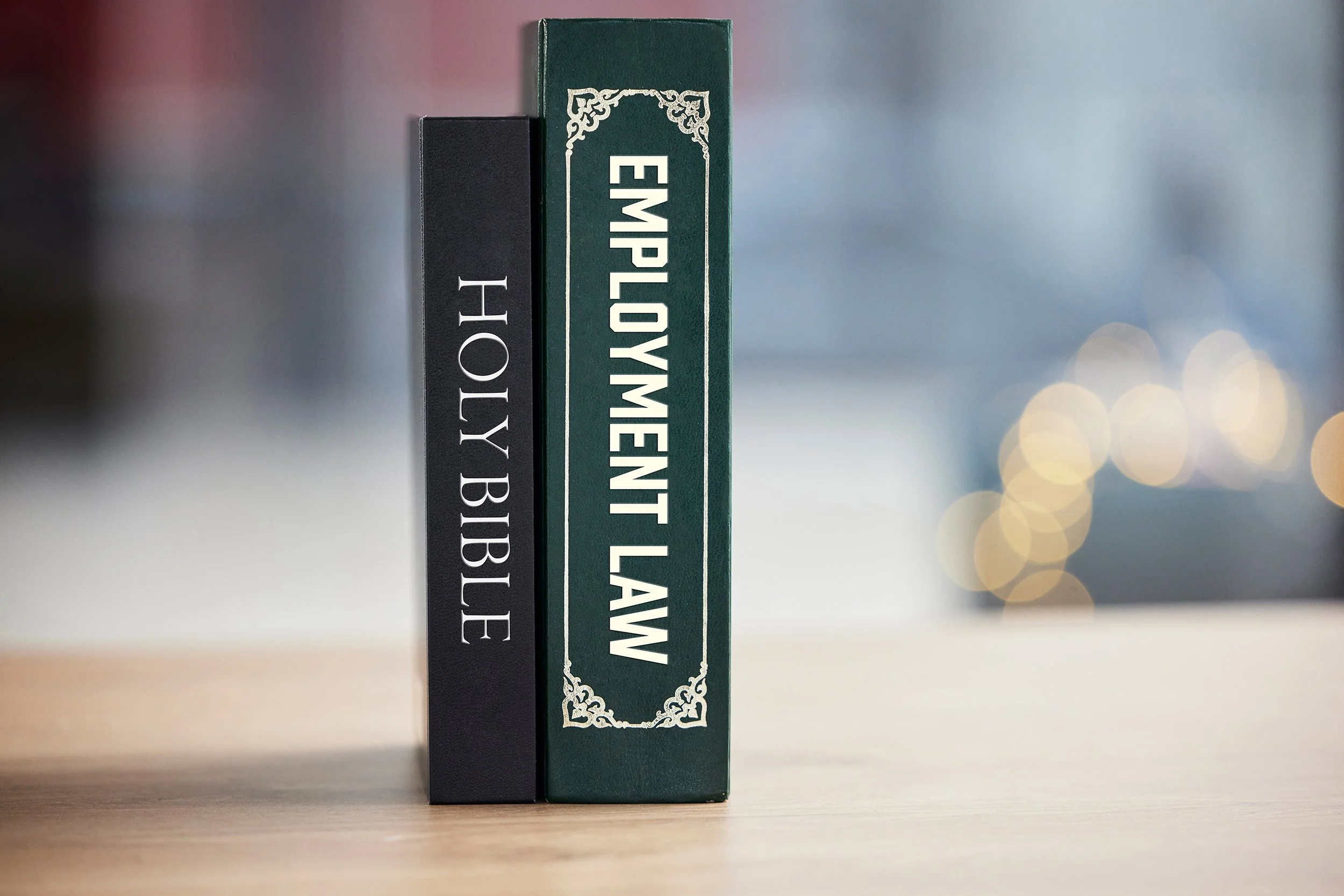
Unfamiliarity with workplace regulations is an unseen liability for faith-based organizations.
When an Alabama church ran into conflict with its custodian, it wasn’t over failure to mop floors. Instead, it fired her over conduct outside the workplace, contending she violated her signed employee code of conduct.
The terminated worker sued for discrimination and the case went to federal court, which ultimately decided in favor of the church.
Houses of worship and faith-based nonprofits walk a tightrope between two kingdoms. They champion a spiritual mission which often calls followers to distinctive lifestyles. Yet the organizational mission is also regulated – to some degree – by the secular kingdom in which they live.
The First Amendment grants significant exemptions and flexibility to religious organizations, but these freedoms are not absolute.
The management of employees (called “employment practices” in insurance-speak) is one of the areas where state regulation leaps the First Amendment wall.
If you employ, you’re an employer
While houses of worship and ministries may not feel like employers, this is indeed their status whenever paychecks are cut. Because employment law is expansive and cumbersome, many religious workplaces fall short of compliance. And, as the saying goes, ignorance of the law is no excuse in court.
Court cases related to employees’ outside conduct are one example of kingdoms in conflict. Other issues include allegations of:
Wrongful termination
Discrimination (race, gender, age, disability, religion)
Harassment, including sexual harassment and hostile work environment claims
Retaliation for reporting misconduct or exercising legal rights
Failure to promote
Unequal pay
Breach of employment contract
Mismanagement of employee benefits

Unwelcome, but not unexpected
Employment issues crop up frequently and seemingly unexpectedly. But a closer look can help us see this phenomenon is unsurprising. Few ministerial leaders or employees have legal or human resources training. Some have never managed a single employee until joining a church staff. Beyond this, the legal code and the scriptures are not clearly aligned. This can lead to both rash decisions and inaction – when neither is appropriate.
In addition, employment law can be complex and even counterintuitive. For example, uncompensated volunteers can sue for workplace discrimination, requiring the church to bring a legal defense.
Knowledge is power
The best way to minimize these conflicts is to become knowledgeable of employment law as it pertains to faith-based workplaces. This is a marathon, not a sprint. It’s not necessary to become an expert: You simply need to know what you don’t know and seek to fill in knowledge gaps.
In addition, outsourcing can supplement your own efforts. HR Ministry Solutions has assisted numerous faith-based organizations with workplace law and practices. A partnership with an HR firm can give you confidence you’re doing things correctly and someone to call when you’re unsure.
Finally, your organization or congregation may include people knowledgeable of human resources, labor relations and the law. Involving these members gives them an opportunity to serve and puts your organization on solid footing.
The insurance angle
Despite our best efforts, we can still fail to comply with workplace law. In addition, anyone can sue, regardless of the merits of the case. Litigation requires a response, and it’s usually costly. Without insurance coverage, the court case described in the introduction could cost a church hundreds of thousands of dollars in legal fees.
Employment Practices Liability Insurance (EPLI) protects faith-based organizations in matters of workplace law. It’s a safeguard against claims made by employees, former employees and even job applicants. These policies provide a legal defense regarding how individuals are hired, managed, disciplined or terminated. EPLI also covers the cost of legal judgments.
It’s not a replacement for wise employee management. For example, it won’t defend intentional illegal acts or pay criminal fines. Standard coverage doesn’t cover wage and hour fines imposed by the government. Workers’ compensation is a separate (though mandated) coverage.
“The best time to plant a tree was 20 years ago. The second-best time is now.”
How to get started
If you don’t have employment practices in place, this can all seem overwhelming. It might be tempting to simply roll the dice and cross your fingers, hoping nothing happens. Yet this will do nothing to reduce your risk or protect your reputation (litigation never makes for good headlines or conversations). Something is always better than nothing, and you can do something.
Begin by taking an inventory. Does your organization have:
An employee code of conduct?
Employment contracts?
Written job descriptions?
A personnel manual?
Do you have access to HR and legal counsel? Don’t wait until a crisis is full blown before contacting these experts. Proactivity may ensure the conflict never erupts.
Finally, do you have Employment Practices Liability Insurance? And if so, is it adequate for your needs? If you’re uncertain, contact Ministry Pacific for a free consultation.
Contact us about employment practices and workers’ compensation insurance
You can also call us at 1.866.870.2700.
Your ministry and workers’ compensation
Although ministries and houses of worship are nonprofit organizations with First Amendment protections, they are still places of employment subject to workplace law. This includes a mandate to provide workers’ compensation in 49 states. It extends even to employees to whom the church does not issue a W2 tax form. This could include a minister who receives housing provided by the congregation or who is sustained by designated (“love”) offerings. Make sure all members of your team are covered, even those who seem not to fit the standard definition of employee. Learn more about workers’ compensation insurance for house of worship and nonprofit organizations