
The Authoritative Guide to Nonprofit and Faith-Based Hiring
Because it’s more than a job. Learn how to recruit and retain people of competence, calling and character.
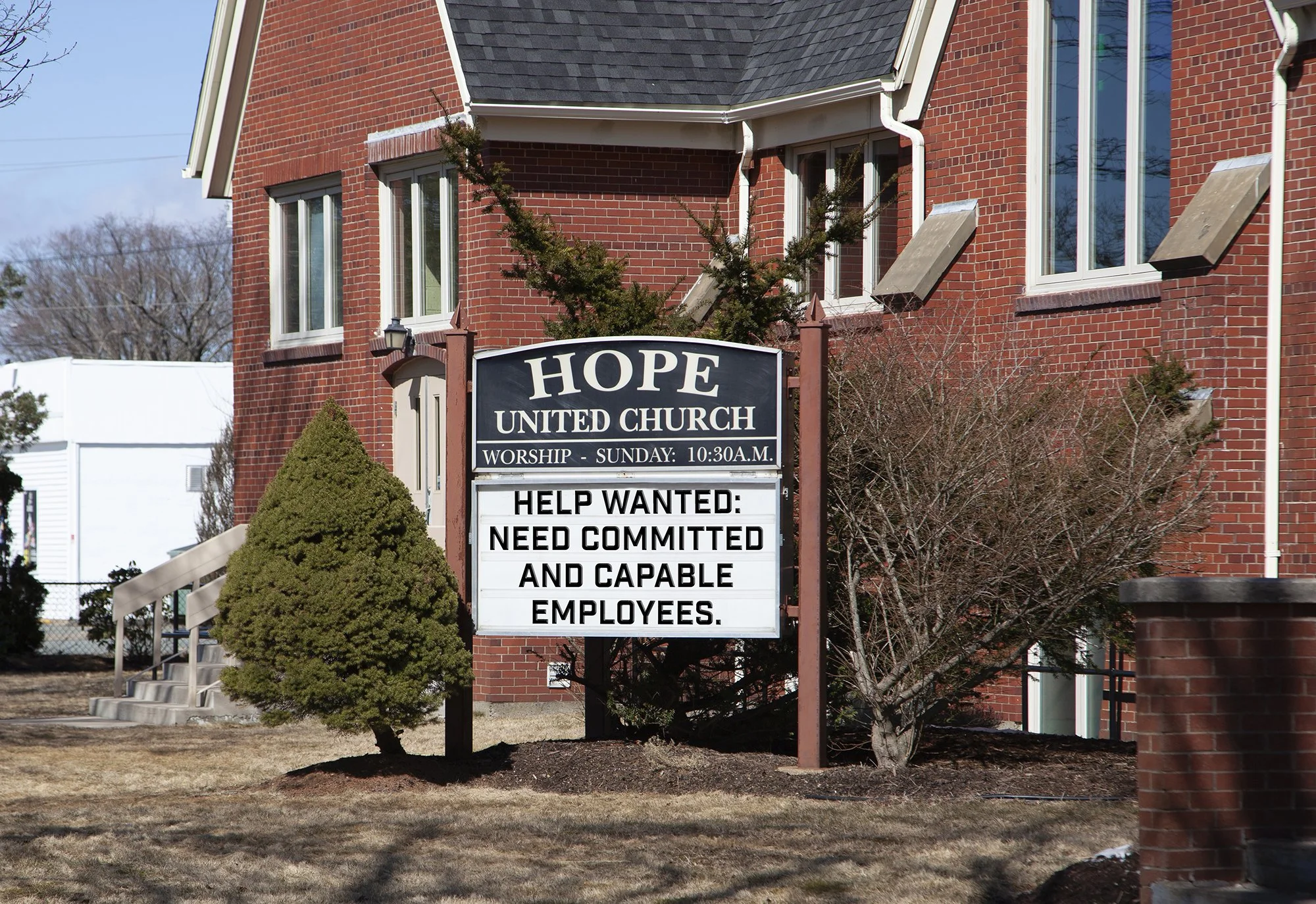
What Every house of worship and Nonprofit Needs to Know Before Their Next employee Search.
Every organization that employs people faces the challenge of finding the right person for the right role. That challenge intensifies when the organization is a church, house of worship, or charitable nonprofit organization. These are places where the work is deeply personal – even sacred – yet budgets are rarely generous. Warm bodies filling seats simply will not do. What is needed are people of competence, conviction, and character.

This guide presents highlights from a webinar featuring seasoned human resources professionals from HR Ministry Solutions along with the Ministry Pacific insurance team. Their insights – shaped by years of hands-on experience with ministries small and large – offer practical guidance for any ministry leader who needs to make a wise hire.
Whether you’re a lead pastor, office administrator, board member or volunteer, this guide will walk you through every major phase of the hiring journey.
“Is finding the right people easy? No. Is it possible? Yes.”
CONTENTS
Inside vs. outside: Hiring from the congregation or volunteer team
Essential employee vetting tools for nonprofits and houses of worship
Common hiring mistakes faith-based organizations should avoid
How should houses of worship and nonprofits determine fair compensation?
Faith-based employment classifications: Employees or independent contractors?
What makes ministry and nonprofit hiring unique?
Hiring for a church or nonprofit is not the same as hiring for a corporation, a retail chain, or a government agency. The criteria and stakes are different and the environment is unique. Understanding those differences is the first step toward hiring well.
Beyond education, skills and experience
In most hiring contexts, a search begins with three standard considerations: education, skills and experience. Those are relevant in ministry, but are incomplete qualifications. Two additional dimensions must be woven into every ministry search: calling and chemistry.
Calling refers to how candidates understand their vocation – not merely as a job or a career move, but as a response to what they believe God expects from their life. If the hiring organization is not religious in nature, then calling can be defined as a passion, cause or conviction. Someone who is simply looking for a professional opportunity will approach the role differently from someone who genuinely believes in a calling.
Chemistry speaks to cultural fit. Will this person thrive in your environment and mesh with your team? Do they energize or drain the people around them? Chemistry is harder to quantify than a degree or a job title, but it can be more predictive of long-term success than either.
The preeminence of character
Above all other hiring criteria in ministry is character. Houses of worship and ministries operate in a uniquely transparent environment. When a character failure occurs – whether it involves moral compromise, financial dishonesty, or some other breach of trust – the consequences are real. Word of the event ripples outward through the congregation, into the community, and may reach the news media. The reputation of the individual, the ministry, and in the eyes of some, the Gospel itself, can be affected.
This is not true in most other employment contexts. If an executive at a food-service company is caught in a scandal, customers are unlikely to abandon the brand on moral grounds. But when a pastor or ministry leader falls, the impact is deeply personal for everyone connected. That reality demands that character be treated not as one factor among many, but as the preeminent qualification.
Assessing character and confidentiality in the interview
Knowing that character matters is one thing. Discerning whether a candidate actually possesses the qualities your ministry needs is another. The interview process is the primary window you have into who someone really is – but only if that process is designed intentionally to reveal character traits.
The unique sensitivity of ministry environments
Churches and nonprofits are in the people business, but they operate at a level of trust that most secular workplaces do not come close to matching. Staff members may sit across from couples navigating the edge of divorce. They may witness the beginning of a church discipline process. They may know who is struggling with addiction, who is in financial ruin, or who is quietly considering leaving the faith. Because congregants are considered spiritual family, they are more transparent with and invested in one another than colleagues who simply clock in to a 9-to-5 job.
This means the ability to hold sensitive information with grace and discretion is a core job requirement for nearly every role in a ministry setting.
Interview techniques that reveal character
The following practices can help you see beyond a polished résumé and rehearsed answers to who a candidate actually is.
Move toward face-to-face interaction early. Begin with a phone interview if necessary, but transition to video and eventually in-person conversation as soon as the process warrants it. Body language, tone and sincerity communicate far more than words alone. Compassion, trustworthiness, and maturity show themselves in person.
Use scenario-based questions and ask them more than once. Rather than asking general questions about values, present specific situations: “Tell me about a time when you were trusted with information that could have hurt someone if it got out. What did you do?” Reframe and revisit similar questions across multiple interviews to check for consistency. If a candidate's answers shift, or if they reveal progressively more concerning information under follow-up, that pattern is meaningful.
Involve others. Have several direct reports or colleagues sit in on different stages of the interview process. What raises a flag for one interviewer may not be noticed by another. Comparing notes after each conversation allows the team to surface patterns and probe deeper where needed.
Watch for orange and red flags. An orange flag is something that warrants a follow-up question, but not immediate disqualification.
Assessments Tools
Behavioral and personality assessments are valuable complements to the interview process. Tools such as DISC, Myers-Briggs, StrengthsFinder, the Strengths Development Inventory, and others can help you understand how a candidate sees themselves and the world, how they respond under pressure, what motivates them, and where their blind spots might lie. Spiritual gifts inventories can add yet another dimension for ministry-specific roles.
No single assessment tells the whole story. These tools are best understood as instruments for better understanding a person and how they are wired rather than as pass/fail tests. Their greatest value comes when interviewers are trained to interpret the results and use them to ask better follow-up questions.
As a practical note, self-ratings (how candidates rate themselves) tend to have little value. A simple skills test or a sample work product is far more revealing. Seeing a candidate actually perform a role before making an offer is the best practice.
Timing: When to administer assessments
The most effective placement for assessments is in the middle of the interview process. Administering them midway allows the results to inform your conversations, giving interviewers a new filter through which to ask questions.
Hands-on assessment: Internships and residency programs
Internships and residency programs give the next generation of church and nonprofit leaders a ground-level view of all aspects of the work. Even in smaller congregations, inviting a trusted individual with a sense of calling to observe and participate – whether paid or unpaid – creates a natural proving ground for future hires.
Inside vs. outside: Hiring from the congregation or volunteer team
One of the most common hiring decisions a church faces is whether to look inward – to a known, trusted volunteer in the congregation – or to open the search to the wider world. A nonprofit could be confronted with a similar decision if a trusted volunteer applies for a paid role. Both paths have advantages and risks. Understanding both before making a decision is essential.
The appeal of the internal hire
Promoting a volunteer into a paid staff role feels natural, and in many cases is the right call. You already know the person. If they have been faithfully volunteering, you have seen their work ethic, their relational style, and their commitment demonstrated over time. They have not shown up for a paycheck, but are involved because they care. They already have relationships within the congregation, and the community trusts them. Onboarding is faster because so much of the cultural and relational groundwork is already laid.
The risks that are easy to overlook
The appeal of the internal hire can make it tempting to skip careful evaluation, yet several factors deserve deliberate attention.
Limiting the talent pool. By defaulting to someone already in the building, you forgo the opportunity to discover other talent, introduce new perspectives, or acquire skills the organization lacks.
An awkward transition? The volunteer-to-employee transition can be harder than it may seem. A relationship built on volunteerism is an equal one, but the dynamic shifts the moment that person becomes an employee. If the employee (a former volunteer) arrive 15 minutes late, you now have an obligation to address it. If performance does not meet expectations, you must have a corrective conversation. Not everyone – on either side of the relationship – handles that transition gracefully.
From free-lance service to obligation. What distinguishes volunteers from employees is that their service is voluntary. No matter how urgent the task, a volunteer can leave at any time – or simply elect not to participate at all. Once the switch flips from volunteer to employee, the context of service shifts radically. What was once done of free will is now compulsory. The pastor or director a volunteer served under is now a supervisor. The former volunteer will have to undertake tasks he might find undesirable or difficult. As a volunteer, he received “attaboys” and thank-you notes; now he will also receive employee reviews. Some volunteers are well-suited to this transition, while others are not. A candid discussion of the realities of the change should be a part any interview process with a member or volunteer.
Gratitude can blind you to skill gaps. When someone has been generously giving their time, it is easy to overlook the gaps in their professional qualifications. Those gaps often become visible once they step into a paid, evaluated role.
Pre-existing relational dynamics. Volunteer environments sometimes harbor interpersonal tensions that have never been brought to the surface. When those individuals are suddenly in an employer-employee relationship, those dynamics can become front-and-center problems.
The deeper question: Calling
Perhaps the most important thing an internal hiring process can do is help a volunteer discern whether they feel genuinely called to a full-time role or whether they simply love volunteering. Just because someone loves baking does not mean they want to open a bakery.
“ It is always worth asking: Is this the right person for this position at this time? There is art, science, and faith involved in that answer.”
Reference checks that actually work
Reference checks have a reputation problem. In an era when most employers have legal policies restricting what they will share – often limiting responses to confirming dates of employment and whether or not they would rehire – many hiring managers have concluded that references are not worth the time. That conclusion is understandable but mistaken.
Why references still matter
First, the rare instance in which a reference contact volunteers a serious concern – even just a change in tone or a single phrase – can be the most important piece of information in the entire hiring process. Second, if a hire ever goes badly and the organization finds itself in litigation, a documented effort to conduct thorough reference checks is part of demonstrating that you acted responsibly as an employer. Third, and perhaps most practically, not every former employer restricts their responses. Some people will speak candidly if asked the right questions in the right way.
How to ask better questions
The difference between a useful reference call and a useless one often comes down to the questions asked. Generic, scale-based questions – “On a scale of one to 10, how would you rate this employee?” – produce generic, unreliable answers. Instead, ask about specific experiences, not general impressions. “Can you describe a time when this individual had to manage a particularly difficult situation? What did they do?”
Ask about growth areas rather than failures. “They clearly did well in your organization. Where would you say there are still areas for growth? If they came to us, what would you challenge them on?” This question is disarming – it acknowledges the candidate's strengths while inviting candor about weaknesses. It can produce useful information.
Ask the same question in different ways. Reframing a question across a single conversation can reveal whether an answer is consistent or whether additional detail emerges under gentle follow-up.
Request a range of contacts. If the contacts provided by the candidate are not responsive, ask for a direct report, a peer, or someone at a different level of the organization. Document every attempt to reach a reference, including those that go unanswered.
What to listen for
Beyond the content of answers, pay attention to tone. A noticeable hesitation before answering a question about a particular topic, a sudden shift to more guarded language, or an unexpected warmth and enthusiasm can all carry meaning. The goal is not “dig up dirt” – it’s to build the most accurate possible picture of who you are about to invite onto your team.
Essential employee vetting tools for nonprofits and houses of worship
Reference checks and interview conversations are important, but they work best when combined with additional resources that together form a comprehensive picture of a candidate. Faith-based organizations have access to several instruments that are not always used – and should be.
Social media and online review
Before a candidate advances far in the process, a thorough online search is worth conducting. This review should include, but not be limited to, social media accounts. The purpose is not to disqualify someone for holding a view that differs from yours. It’s to identify anything that warrants a question or conversation. If a candidate has publicly affiliated with an event, cause, or content that seems inconsistent with your ministry's values, that can become a productive discussion point. Controversial online statements have derailed numerous careers in the secular world. Inappropriate public statements can be even more painful and damaging in faith-based settings. Candidates’ responses to being asked about online activity is itself revealing. Are they open? Defensive? Teachable? Grateful that you cared enough to ask? This is especially relevant with younger candidates, for whom social media is simply a natural extension of their daily life.
Staff lifestyle agreements
One of the most valuable and underused tools in faith-based HR is the staff lifestyle agreement – sometimes called a staff covenant, commitment to community, or behavioral expectations document. Whatever the name, the substance is the same: It’s a clear, written articulation of what the organization believes, what behavioral standards all staff members are expected to uphold, and the scriptural (or other) basis for those standards.
This document applies to everyone on the team – from the pastor or CEO down to the part-time children's ministry worker. Every staff member signs it, signifying agreement and a commitment to comply. It is not primarily a disciplinary tool, though it does provide recourse if something goes wrong. Its primary purpose is setting clear expectations from the beginning, naming the behavioral standard to which everyone is held.
Used well, the staff lifestyle agreement accomplishes several things simultaneously. It communicates to candidates that the church or nonprofit has thought carefully about its values and is serious about them. It gives candidates an opportunity to raise concerns or questions before they are hired. And it establishes a foundation for the conversations that accountability requires. Caring means clarity.
If a candidate completes the interview and hiring process and doesn’t understand your organization’s behavioral expectations, then the process has failed. There should be no suprises.
Confidentiality Agreement
Beyond the staff lifestyle agreement, a separate, stand-alone confidentiality agreement is strongly recommended – particularly for roles that involve regular contact with sensitive pastoral or counseling information. This document should be introduced during the onboarding process and signed before the employee begins work. It should be referenced in the employee handbook as well.
Confidentiality in a ministry or social services context extends well beyond the obvious. It covers counseling sessions and the identities of those who attend them. It covers donation records and the content of staff meetings. It also covers disciplinary processes and terminations. When an employee is terminated, a natural human desire – on the part of staff and congregants – is to demand to know what happened. A single designated spokesperson, working from a carefully worded statement developed with HR support, is the appropriate way to respond.
Background Checks
Background checks should be a standard part of the vetting process for all ministry hires. Given the populations that faith-based organizations often serve – children, the vulnerable, those in crisis – the diligence required is high. Consult with an HR professional to understand what types of checks are appropriate for each role and jurisdiction.
Common hiring mistakes faith-based organizations should avoid
Even well-intentioned ministry leaders make predictable, avoidable errors in the hiring process. Knowing what those errors are – and why they happen – is the first step toward not repeating them.
Rushing to fill the vacancy
This is the most common mistake. When a key staff member departs, the ministry feels the gap immediately. Programs lose momentum. Volunteers feel unled. The temptation to move quickly – to just get someone in the seat – is powerful. Resist it. The cost of a rushed, poor hire is almost always greater than the cost of a temporary vacancy. The ripple effects of a toxic hire can last for years.
Failing to update job descriptions
Roles in ministry can evolve quickly. The job description that was written when the last person was hired may bear little resemblance to what the role actually requires. What does this role actually need to accomplish now? What skills and experiences are truly essential going forward?
For example, a role involving the payment of vendors and staff may have a job description created many years ago when manual check-writing was mainstream. Today’s skills require working with third parties to automate electronic payments and associated documentation. Accounting software skills, or familiarity with them, may be necessary. A job description that fails to describe current expectations is a problem waiting to happen.
A well-written, current job description is the foundation of a productive search, requiring you to determine who and what you are looking for before you start.
Overlooking cultural fit
A technically qualified candidate who does not fit the culture of a ministry can do more damage than someone with slightly fewer credentials who fits beautifully. Cultural misalignment creates friction, confusion, and eventually turnover. Sometimes, a crossover from business to ministry can result in friction. This is by no means universal; it truly depends on the individual. Business acumen is often desperately needed in nonprofit contexts. But it’s not unheard of that a “get things done” veteran of the marketplace can become frustrated with the unique, human-centered culture of houses of worship and nonprofit organizations. In these environments, not everything is about efficiency and ROI. For example, what does an “efficient” visit to the ER waiting room look like? Make sure employer and employee cultures match.
Moving too slowly
Churches often involve multiple layers of approval in a hiring decision – a supervisor, a lead pastor and a board or committee. The result can be a process so slow that your top candidate accepts another offer before you make one. If a candidate is strong, you’re unlikely to be the only organization who has noticed. Keep the process moving and communicate clearly with candidates about where they are in the timeline.
Not debriefing after a departure
When a staff member leaves – for any reason – organizations often jump straight to the search without pausing to reflect. What worked about the previous hire? What did not? What changed in the role over time? What skills or experiences does the next person need that the last person lacked? These strategic conversations are frequently skipped, resulting in missed opportunities to improve.
Underestimating the importance of confidentiality
The ability to manage sensitive information discreetly is a core competency for ministry and nonprofit staff. Don’t assume that all candidates understand or practice this value. Seek understanding through scenario-based questions and explore it in reference calls. Address it directly in the onboarding process with both a staff lifestyle agreement and a confidentiality agreement.
“Investing on the front end of the hiring process is not a luxury. It is how you protect the mission, the team, and the people you serve. ”
How should houses of worship and nonprofits determine fair compensation?
Determining compensation is one of the most difficult questions in ministry and nonprofit hiring. The answer is almost never simple, and getting it wrong can create lasting problems. Underpaying drives away qualified candidates and could signal that the organization does not value its people. Overpaying strains already tight ministry budgets and can create inequities within the team. The path to a fair number runs through research, classification, and careful analysis.
Start with classification
Before asking what to pay someone, make sure they are classified correctly. Are they an employee or an independent contractor? Are they exempt from overtime or non-exempt? Is the position eligible for ministerial tax exemptions? These are not trivial questions. Misclassification carries significant legal and financial risk. HR Ministry Solutions routinely helps churches navigate these questions as part of a compensation audit and market compensation analysis.
Market analysis: Finding the right comparison points
Compensation for a given role should be set with reference to what comparable roles pay in your geographic market and within the ministry sector. This sounds straightforward until you realize how complicated “comparable” actually is. Consider the title of “Creative Director.” At one church, that role may encompass leading worship, overseeing video production, and managing all digital ministry. At another church, the same title might simply mean managing social media. Salary data without an accompanying job description is nearly meaningless.
HR Ministry Solutions uses six to eight different reference points in developing a compensation market analysis, including local market data, denominational salary surveys, job postings from states with pay transparency laws (such as California, which requires salary ranges to be posted), the scope and responsibilities of the specific role, the size and budget of the organization, and where the position falls within the organizational structure.
Making it fair internally
Once you have a market-rate range, you must also consider internal equity: How does this compensation compare to peers at the same organizational tier? A new hire who is paid significantly more than a comparable peer could create resentment and confusion. A thoughtful compensation structure considers the full picture – base salary, benefits and any bonuses or additional compensation – rather than just the headline number.
Faith-based employment classifications: Employees or independent contractors?
Few HR errors are more common in churches and ministries than misclassifying workers. The appeal of the independent contractor relationship is understandable – it appears simpler, less expensive, and less administratively burdensome. But the consequences of getting it wrong can include significant penalties, back taxes and legal liability.
What determines the classification?
The central question in classifying a worker is behavioral control: How much does the organization direct and control the way the work is performed?
An employee is someone whose job duties, schedule, tools and methods are substantially directed by the employer. A worship leader who is told when to arrive, what instruments to use, how many songs to prepare, and what theme to align with the sermon series is functioning as an employee, regardless of what the contract says.
Independent contractors are engaged for a specific project or outcome, use their own tools and methods and are free to determine how the work gets done. A web developer hired to redesign a website, given a six-month timeline and no direction on software or process, is likely a legitimate contractor.
Common misclassifications in ministry
Two roles that are frequently misclassified in church settings are worthy of specific mention. Worship leaders are almost always employees, not contractors – because the organization directs nearly every aspect of how, when and what they perform. Childcare workers are similarly misclassified with regularity. When an organization dictates how workers interact with children, provides training, sets the schedule and supervises the work, that is an employer-employee relationship, not a contractor arrangement.
When in doubt, classify as an employee
The safer default, when the distinction is genuinely unclear, is to classify the worker as an employee. The test for independent contractor status is specific, and the burden of proof tends to fall on the employer if a question arises. A misclassification discovered after the fact carries penalties that far outweigh the perceived cost savings of the contractor arrangement. Churches with 10 or fewer staff members are particularly prone to this error – often with the best of intentions and a creative desire to make things work on a tight budget.
HR Ministry Solutions offers free webinars on the topic of employee vs. independent contractor classification.
Conclusion and further resources
Hiring for a house of worship or faith-based nonprofit is one of the most consequential acts of leadership a ministry will undertake. The people who serve on staff are not just filling roles – they are shaping culture, influencing the congregation, and representing the organization and its mission in the world. Getting that right is worth the investment of time, attention, and resources required.
About Ministry Pacific Insurance Services
Ministry Pacific is an insurance broker devoted to serving churches and charitable nonprofits. We’re different from your insurer. We’re not insurance agents. Agents work for an insurance company. As a broker, we work for you. We are free to explore creative solutions to your problems. We also assist with claims when you need to file one with your insurer. Our services are free. Questions? Please contact us.
Insurance that protects ministry and nonprofit workplaces
A house of worship or nonprofit organization doesn’t have to break employment law to be sued or accused of doing so. An employee (or ex-employee) may claim discrimination, harassment or unfair treatment occurred at your workplace – even if the accusation is patently false. What can be done?
Employment Practices Liability Insurance protects employers against claims made by current and former employees (and even job applicants) who allege violations of their workplace rights. This coverage protects organizations from litigation and court judgements concerning how employees are hired, managed, disciplined or terminated.
For a free consultation about Employment Practices coverage, contact us below or call us at 1.866.870.2700.
GET A FREE CONSULTATION