
Are your employees running $1 million errands?
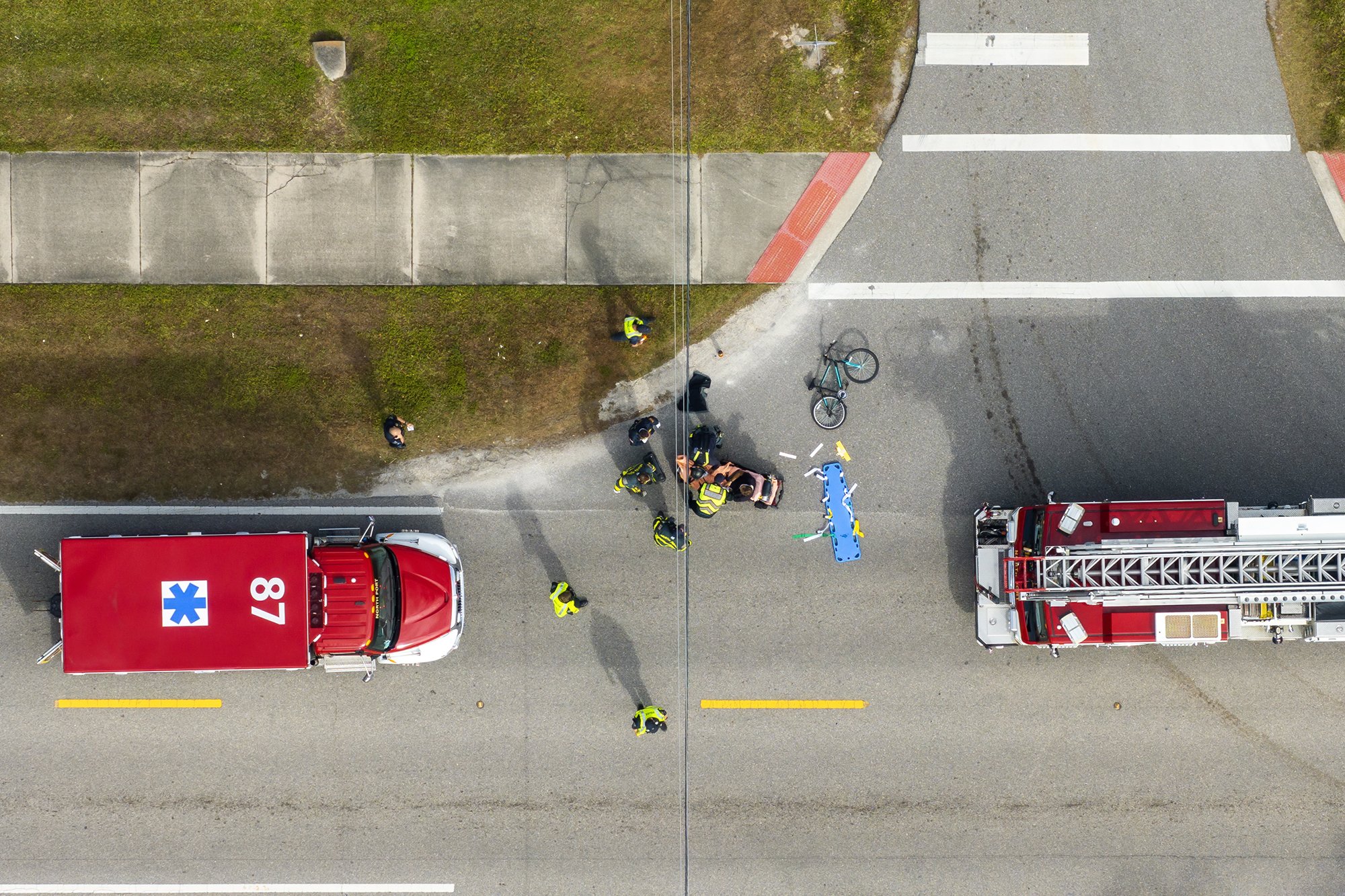
When personal vehicles are used for business tasks, liability can fall back on their employer. There’s a solution.
"What we anticipate seldom occurs, but what we least expect generally happens." – Benjamin Disraeli
Sometimes that’s how it goes when protecting our organizations from risk. We’ve checked all the boxes, finished all the trainings – and then – something hits us seemingly out of nowhere.
Employee use of personal and rented vehicles can be one of these blind spots. That’s because there’s a common misunderstanding about the role of commercial vehicle insurance. This type of insurance is entirely necessary, but is limited in its purpose. It only extends to official vehicles titled to the house of worship, nonprofit or business. Examples include a church van, food pantry supply truck or a company car. Accidents and injuries that occur in these vehicles are covered under the commercial policy.
When standard commercial coverage doesn’t apply
Official business, however, doesn’t always take place in official vehicles. If an employee is driving to purchase office supplies, he’s more likely to use his own vehicle than to pilot the 15-passenger church van.
In addition, some nonprofits and houses of worship often have no official vehicles. Employees use their own transportation to run errands, visit shut-ins, pick up supplies or drive to conferences.
When automotive damage and injuries occur in these scenarios, commercial auto insurance does not apply: It’s only for vehicles titled to the organization.
Instead, the employee’s personal auto insurance absorbs the claim – even if the accident happened during a work-related trip.
So far, so good – provided the driver is adequately insured. But if damage and injuries exceed the driver’s insured limits, the injured parties may sue the employer for the excess amount. It could be $10,000. Or it could be $1 million (or more). When this happens, secondary insurance known as Hired and Non-Owned Automotive (HNOA) kicks in to cover the overflow damages.
The court cases cited below [1] illustrate three real-world examples where employee drivers injured pedestrians or caused serious multi-car accidents that burned through their limits of personal auto insurance. HNOA covered the excess damages. Without backup insurance, litigation could bankrupt a house of worship, nonprofit or business.
Work-related auto accidents: A real-world risk
As leaders who watch over tight budgets, there’s always a temptation to pinch pennies on insurance. But this is no place to cheap out.
Consider how often employees use their vehicles to:
Purchase office supplies.
Visit a parishioner.
Visit a patient at a hospital.
Pick up mail.
Transport congregants.
Pick up or deliver supplies.
Transport a guest to the airport.
And more.
“The likelihood of an employee having an auto accident is not hyperbole. Experts calculate there are about 17,000 police-reported vehicle accidents daily.”
The likelihood of an employee having an auto accident is not hyperbole. Experts calculate there are about 17,000 police-reported vehicle accidents daily. Those result in more than 6,000 injuries and more than 100 deaths – every single day. If you or your employees use their personal vehicles for business purposes, insuring them properly is a reasonable and prudent expenditure.
What HNOA does
There are two components of HNOA insurance:
Employees using their personal vehicles – or those of members or volunteers – for company activities.
Employees using rented or hired vehicles for company activities.
It’s important to understand that HNOA insurance only responds to third-party liability. In other words, it will pay damages to others, but not to your employees. If that sounds unjust, understand that insurance is already in place for the employee driver:
Personal vehicle insurance
Workers’ compensation insurance
Each type of coverage has its role and none covers everything.
The scope of HNOA insurance is limited to on-the-job driving tasks. It does not cover commuting to and from work or accidents related to personal errands – even if they occurred during business hours.
Beyond insurance: Actions to reduce driver risks
Insurance is crucial, but it’s not the only action required to reduce driving risks. We recommend:
All drivers carry a reasonable amount of insurance on their personal policy. Bare-bones policy limits will be quickly used up, transferring the liability to the employer. A standard recommendation is 100/300/100. [2]
Checking the MVR (motor vehicle record) of employees and volunteers driving on your behalf.
Creating a drivers code of conduct.
Creating a drivers policy
Creating a vehicle use and maintenance policy
Learn more about our recommended records checks, codes of conduct and policies here.
Targeting the most high-profile risks
We know that, when it comes to insurance, organizations must pick and choose. They can’t cover everything. A sound approach, then, is determining which risks are mostly likely to occur and insuring appropriately. It only takes a split-second to cause an accident, and many employees regularly drive throughout their workday. That makes HNOA a sensible policy for every organization with drivers.
There’s never a guarantee that a trip – whether to Staples or summer camp – will go safely. But preparing with sound policies, driver screening and HNOA insurance can provide confidence that you’ve done your part.
Questions? Contact us for a free consultation about commercial vehicle and HNOA insurance.
[1] Hudson Specialty Insurance Co. v. Brash Tygr, LLC
First Chicago Insurance Company v. Molda
Safeco Lloyds Insurance Co. v. Allstate Insurance Co.
[2] 100/300/100 represents $100,000 for bodily injury liability per person, $300,000 for bodily injury liability per accident, $100,000 property damage liability per accident.