
People-centered performance improvement for faith-based organizations

By recognizing accountability is a two-way street, nonprofits and houses of worship can honor the dignity of employees while striving for growth.
By Michael Erisman
Senior Principal and Chief People Officer, Talent Realized
Many of us have experienced the challenge of addressing performance concerns with a staff member, ministry leader, or volunteer. In the business world, this is often handled through a Performance Improvement Plan (PIP). In the faith-based and nonprofit world, the terminology may be different, but the underlying challenge is the same: How do we address performance concerns honestly, fairly and (for churches) biblically while preserving dignity, encouraging growth and protecting the mission of our organization?
Moving beyond one-sided approaches
Traditional performance-improvement processes are often one-sided. A supervisor identifies the problem, writes the expectations, presents the employee with a plan, and then evaluates whether the employee has complied. While there are times when formal documentation is necessary, this approach can become adversarial. It can communicate that the person is the problem rather than recognizing that leaders and staff members share responsibility for creating the conditions necessary for success.
However, the goal is not simply to identify failure. The goal is restoration. I think we would all agree that in mission-focused workplaces, accountability should therefore not be viewed as punishment. It is part of faithful stewardship. It’s required for us to achieve our mission.
Our employees and mission leaders are likewise entrusted with responsibilities, resources, relationships and opportunities to serve. The appropriate question is not simply, “Are you doing what I told you to do?” but rather, “Are you faithfully stewarding what our mission is intended for and what has been entrusted to you?” This perspective changes how we approach performance concerns.
Circles of responsibility
Leadership still has the responsibility to establish clear expectations, define responsibilities, provide resources, remove unnecessary barriers, give appropriate guidance and communicate when performance is falling short.
A famous proverb teaches, “Without counsel, purposes are disappointed: but in the multitude of counsellors, they are established.”
Leaders cannot reasonably hold people accountable for expectations that were never made clear, resources that were never provided or priorities that constantly changed.
Before concluding that an employee is unwilling or incapable, a leader should honestly ask whether the organization has provided the clarity, training, support and direction necessary for success.
The employee also has a clear responsibility. Each person must take ownership of the role to which they have been called and the responsibilities they have accepted. That means a staff member cannot simply wait for a supervisor to solve every problem or define every next step.
A mature and competent employee should be willing to receive correction, identify deficiencies, seek guidance and take practical action to improve. Accountability requires ownership.
Joint accountability
For these reasons, a more effective approach to a performance improvement process is one in which both the leader and the employee are accountable.
The leader should clearly document the expectations of the role, describe the current level of performance, identify specific gaps and explain why those gaps matter to the mission and or ministry.
Employees should then participate actively by developing a written plan that explains what they will do differently to address the gaps and achieve the required outcomes.
This approach is consistent with the biblical principle of speaking truthfully while seeking restoration, often referred to as “speaking the truth in love.” Truth without love can become harsh and destructive. Love without truth can become avoidance. Healthy leadership requires both.
“We should be willing to name problems clearly while also treating people with dignity, patience and a genuine desire to help them succeed.”
Several outcomes can result from this process.
The first, and best, outcome is that the employee develops a meaningful plan, accepts responsibility for the areas that need improvement and follows through. Because the employee has participated in creating the plan, there is greater ownership and understanding. The leader’s responsibility then becomes primarily one of coaching, encouragement and accountability. Regular follow-up can reinforce progress and address concerns before they become larger problems.
A second outcome is that the employee’s initial plan reveals that the performance problem is not entirely within the employee’s control:
Perhaps expectations were unclear.
Perhaps priorities conflict.
Perhaps the person lacks training, resources, authority or information necessary to perform effectively.
Perhaps leadership has not removed a barrier that has been present for months.
A collaborative process makes these issues visible. Leaders then have an obligation to address what belongs to them. Changes can be made, and a new plan developed by the employee to ensure success.
A third outcome is that the employee determines that the role is not a good fit or is unwilling to make the commitments necessary to meet the expectations of the position. That may ultimately result in resignation or separation. While that can be difficult, it is generally better for an organization to have someone serving in a role who is willing and able to fulfill its responsibilities than to continue indefinitely with conflict.
Healthier results
In every case, the process can produce a healthier result because it is based on clarity, accountability, guidance and mutual responsibility rather than simply discipline. It also creates a written record of what has been discussed and agreed upon, reducing misunderstandings and making future conversations more objective.
A people-centric approach does not mean avoiding difficult conversations. The emphasis is on addressing concerns directly, privately, and constructively rather than allowing frustration, gossip or resentment to grow.
The objective, therefore, should not be to create a process that simply makes termination easier. The objective should be to create a process that gives people a fair opportunity to understand expectations, respond to concerns, receive guidance and improve. When a separation ultimately becomes necessary, the organization should still be able to say that the person was treated fairly, spoken to truthfully, given appropriate support and held accountable for the responsibilities entrusted to them.
This approach also reflects the character of leadership. Leaders are stewards, not owners. Employees and ministry leaders are stewards as well. All of us will ultimately give an account for how we use the opportunities and responsibilities that have been entrusted to us.
A healthy performance process should therefore be approached with humility. The leader should ask, “What is my responsibility in this situation?” The employee should ask, “What is my responsibility in this situation?” Both should ask, “What needs to change for this ministry and this person to succeed?”
When accountability is combined with grace, when expectations are combined with guidance and when correction is pursued with the goal of restoration, performance management can become more than an administrative exercise
The goals:
Clarity about what is expected
Honesty about what is happening
Guidance about what needs to change
Accountability for following through
That is a healthier approach for your organization and the employee and is more consistent with the mission call to faithful stewardship.
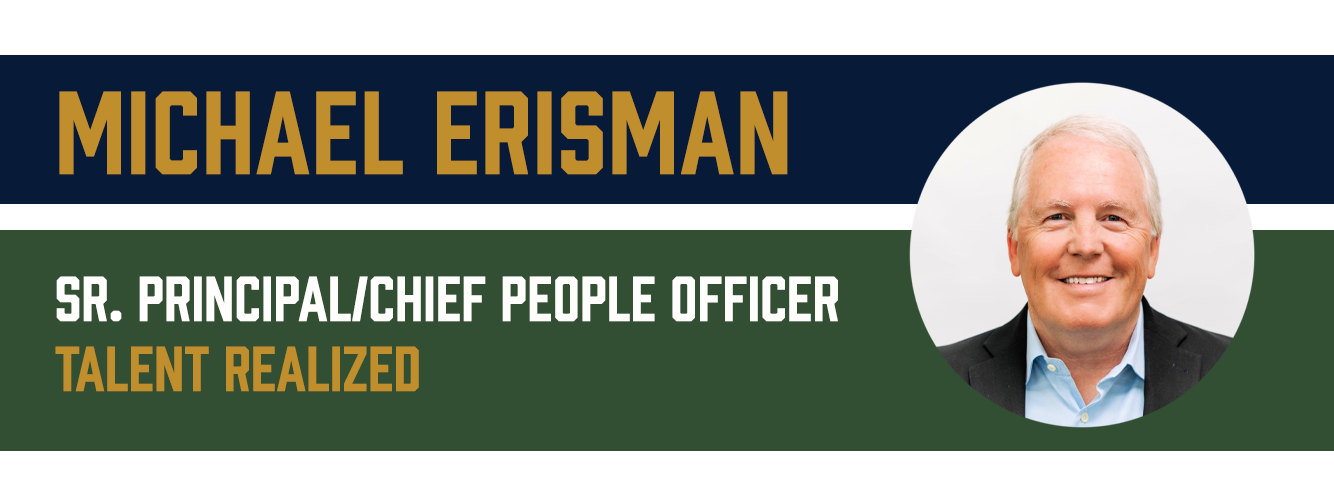
Michael Erisman is Senior Principal and Chief People Officer for Talent Realized. Talent Realized gives church leaders a trusted people advisor – someone who understands both the spiritual weight of ministry and the practical realities of leading a team. They work with churches of every size, offering peer forums, executive coaching, and fractional HR leadership to match where you are and where you're headed. Their team of Chief People Officers brings decades of senior HR leadership experience across businesses, nonprofits, and churches, so you don't have to navigate people challenges alone.